MATT
WHITE
Not a doctor. Not a dietitian. Definitely a CIO. Definitely an ex-41" waist. Very much a person who has had a long, personal, and complicated relationship with biscuits.
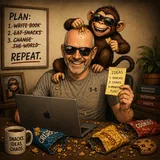 Not Matt. But accurate.
Hi. I'm Matt.
Professionally: CIO. Personally: recovering biscuit enthusiast.Let me be upfront about something. I am not a doctor. I am not a dietitian. I do not have a PhD in behavioural psychology or an impressive collection of framed certificates.
What I do have is a very long and deeply personal history with biscuits — and a professional and personal background in coaching and behaviour change that eventually led to a revelation on an ordinary Tuesday evening that changed how I understood everything I thought I knew about why people eat the way they do.
For years, I understood nutrition. I understood training. I could write a plan that was genuinely excellent — clear, structured, achievable. The kind of plan that should work.
The problem was that it frequently didn't.
Not because the plan was wrong. The plan was fine. The problem was that the plan assumed I would follow it — and as it turns out, I'm considerably more complicated than plans. As are most of us.
"I was sitting reading a book about how the brain makes decisions, eating a biscuit I hadn't consciously decided to pick up, when it clicked. The problem wasn't willpower. The problem was that everyone — myself included — was treating food decisions as if they were entirely rational."
That moment was several years ago. Since then I've used the Snack Monkey framework with hundreds of people — in conversations, coaching sessions, and on one memorable occasion, a 10-hour flight to San Francisco (sorry, Helen).
The response is always the same: recognition. Not polite recognition. The real kind. The slightly uncomfortable "oh, that's exactly what I do" kind that means something has landed properly.
That's what this book is. Everything I've learned, written in a way that I hope feels more like a conversation than a lecture.
The GB Paraclimbing Thing
One of the things I talk about in the book is habits beating motivation. I know this isn't just theory because I've lived it.
Training six days a week for years as part of the GB Paraclimbing team, maybe one day per week I woke up genuinely looking forward to it. The other six I was tired, sore, had seventeen other things I "should" be doing. The difference between me and someone who doesn't succeed isn't motivation. It's that I found a way to go anyway.
Not through heroic willpower. Through habit. It stopped being a decision.
That's the same principle at the heart of everything in this book — and it works whether you're training for competition or just trying not to eat your body weight in crisps on a Friday evening.
The Professional Bit
In my day job I'm a CIO — which means I spend a lot of time thinking about systems, behaviour, and why smart people make decisions that look, from the outside, like they don't quite add up.
Turns out that's exactly the same problem as the biscuits. Just with slightly higher stakes and more meetings.
 Instagram
 LinkedIn